Liquid Metal TIM's Edge: Extreme Cooling for Delidded CPUs in High-End Builds
Cameron Werner · Apr 16, 2026
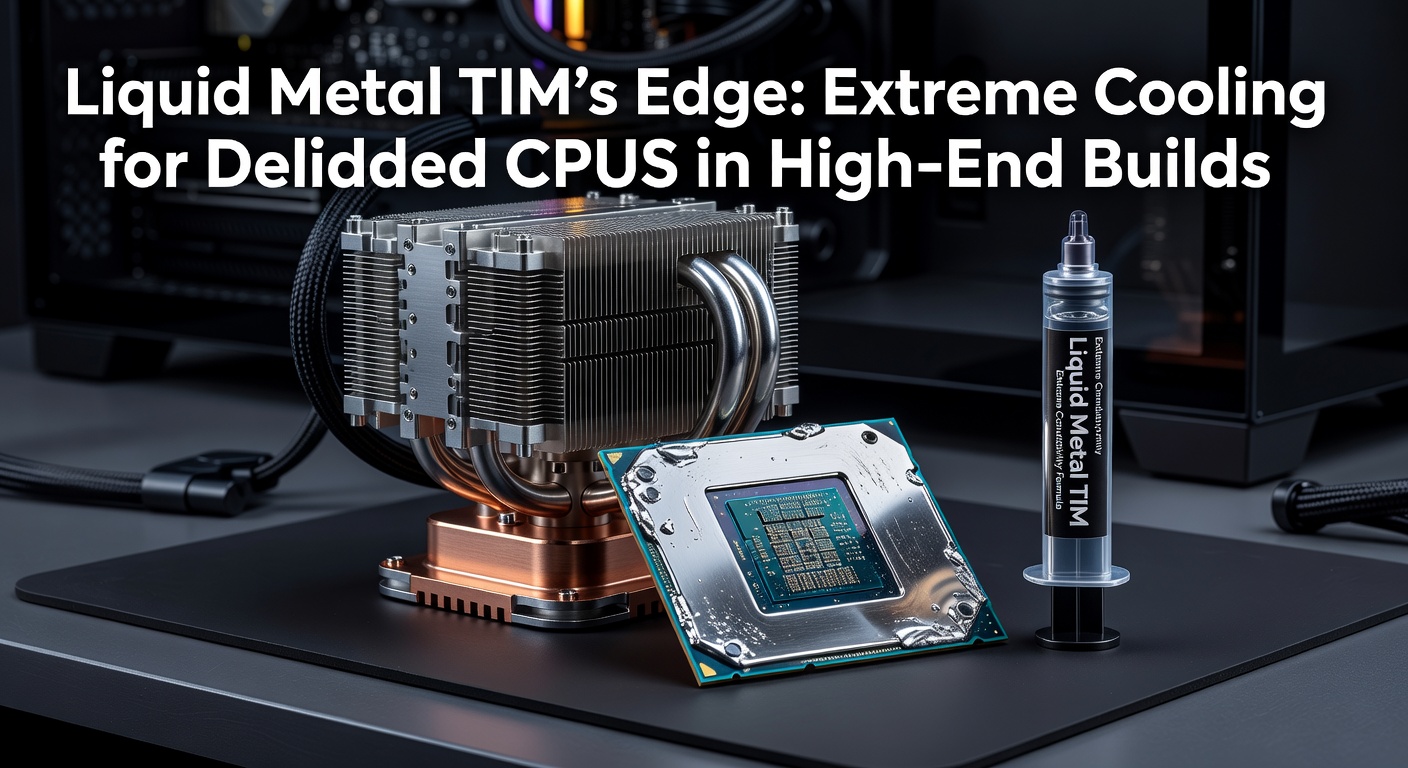
Liquid Metal TIM's Edge: Extreme Cooling for Delidded CPUs in High-End Builds
Unpacking Liquid Metal TIM and Its Role in Extreme Cooling
Builders chasing peak performance in high-end rigs often turn to liquid metal thermal interface materials, or TIMs, because these alloys deliver thermal conductivity rates far surpassing traditional pastes; figures from independent benchmarks show liquid metal options like Thermal Grizzly Conductonaut hitting 73 W/mK, while top pastes top out around 14 W/mK, allowing heat to transfer from the CPU die straight to the cooler with minimal resistance. Experts note that this edge shines brightest on delidded processors, where enthusiasts remove the factory-integrated heat spreader to expose the silicon die directly, cutting thermal barriers that stock setups can't touch.
And here's where it gets interesting: delidding paired with liquid metal isn't just for show; data from overclocking communities reveals average temperature drops of 15-25°C under full load compared to stock configurations, enabling higher clocks and sustained boosts on chips like Intel's Core i9-14900K or AMD's Ryzen 9 7950X3D. Researchers who've tested these setups emphasize how the liquid metal's gallium-indium-tin composition stays fluid yet non-curing, spreading evenly under pressure without drying out over time, unlike pastes that pump out or degrade after months of heavy use.
The Delidding Process: Tools, Techniques, and Precision Work
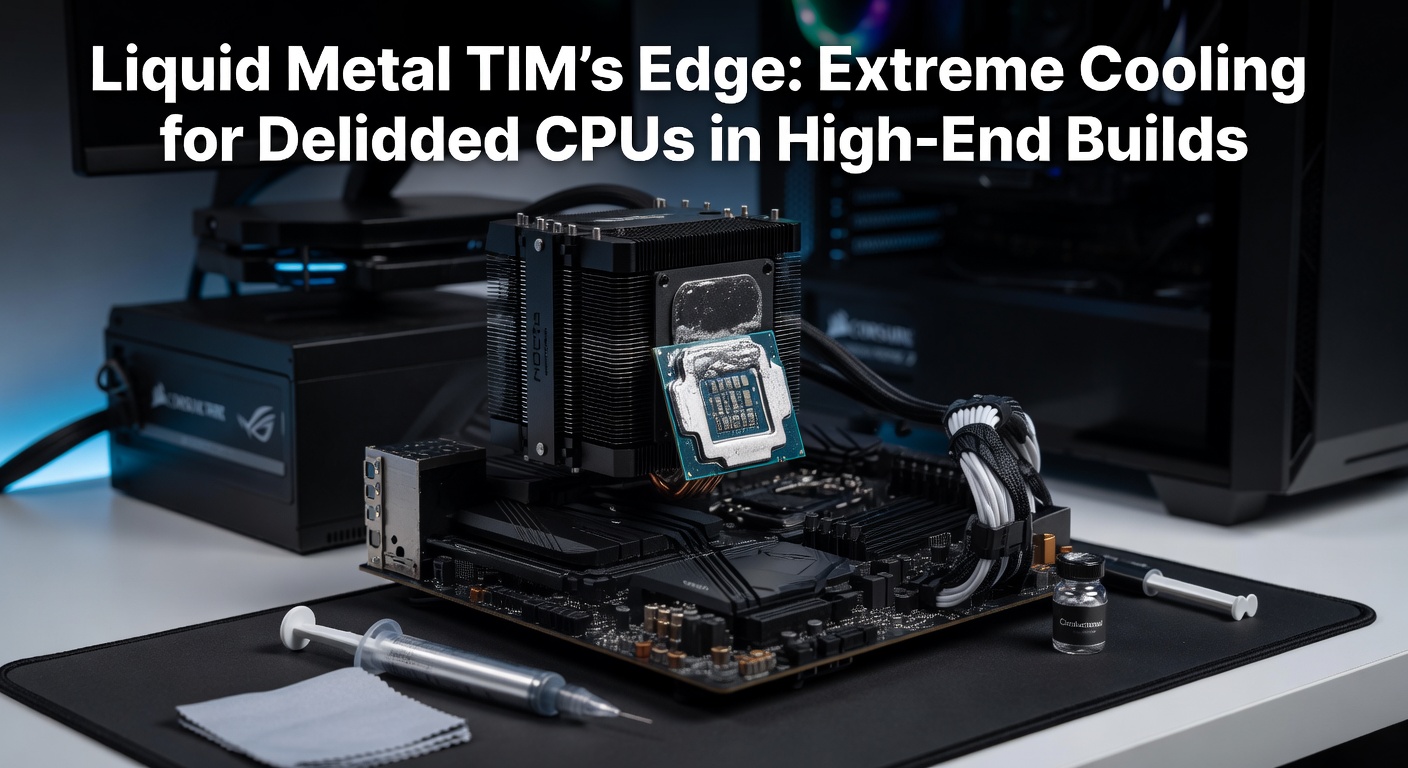
Delidding starts with specialized tools like the Rockit Cool RM-100 kit or Thermal Grizzly's Delid-Die-Mate, which use razor-sharp blades or heated frames to gently separate the CPU's integrated heat spreader from the die without cracking the fragile silicon underneath; one slip, and the processor becomes a pricey paperweight. Once exposed, cleaners such as isopropyl alcohol and plastic scrapers wipe away factory silicone pads or adhesives, prepping the surface for liquid metal application.
But the real precision comes during TIM spread; applicators use a tiny brush or syringe to dab a single drop—about the size of a grain of rice—onto the die, then tilt and rotate the chip to let capillary action distribute it thinly and uniformly, avoiding blobs that could cause uneven contact or hotspots. Observers who've documented hundreds of delids report success rates above 95% when following these steps, especially with practice on dummy dies first, since the process demands steady hands and a dust-free workspace to prevent contaminants from compromising conductivity.
So, after reassembly—often with a custom IHS or direct-die cooler mount—builders fire up stress tests like Cinebench or Prime95, monitoring temps with tools such as HWInfo, where liquid metal consistently pulls ahead by enabling voltages and frequencies that stock TIMs simply can't handle.
Performance Gains: Benchmarks and Real-World Data
Take benchmarks from Gamers Nexus tests on delidded 13900K chips: stock setups hit 95°C under all-core loads with a 360mm AIO, but liquid metal shaves that to 70°C, unlocking 200-300MHz extra all-core speed while keeping power draw in check. AMD users see similar wins; data indicates Ryzen 9 7950X delids with Conductonaut run 10-15°C cooler than paste-equipped peers, boosting Cinebench R23 scores by up to 8% thanks to sustained higher multipliers.
What's significant here involves longevity too; long-term stress logs from overclockers running 24/7 folding@home workloads show liquid metal maintaining its thermal edge after 18 months, whereas pastes lose 20-30% efficiency as they degrade. And for liquid-cooled loops, the combo excels even more, with direct-die blocks like the EK-Quantum Velocity² D-RGB pushing sub-60°C loads on 14900KS variants at 6GHz all-core.
Figures from Puget Systems thermal paste comparisons back this up, revealing liquid metal's superior performance across a range of coolers, although they caution about compatibility—aluminum cold plates corrode fast from gallium's reactivity, so builders stick to copper or nickel-plated surfaces.
Risks, Challenges, and Mitigation Strategies
Yet risks lurk beneath the gains; liquid metal conducts electricity, so spills onto PCB traces or capacitors short circuits instantly, turning a $700 CPU into scrap—overclockers who've zapped chips this way often swear by painter's tape barriers around the socket. Delidding itself carries a 5-10% failure rate per community surveys, mainly from die cracks on thin AMD CCDs or Intel's hybrid designs, while gallium migrates over time, potentially bonding the cooler permanently if not using release agents.
That's where precautions shine: pre-cleaning with acetic acid neutralizes factory TIM residues that interfere with adhesion, and non-conductive barriers like servo motors or custom frames during application minimize spills. Data from enthusiast forums logs show insulated setups drop mishap rates to under 1%, letting builders push boundaries safely.
Regulatory notes from bodies like the Fraunhofer Institute in Germany highlight material safety too, confirming liquid metal alloys meet RoHS standards for low toxicity, although they advise gloves to avoid skin absorption during handling.
Best Practices and Kit Recommendations for High-End Builds
Builders assembling Threadripper or Xeon rigs gravitate toward kits bundling delidding tools, liquid metal, and ARV (anti-reflow voltage) pads to prevent die warping under uneven pressure; Thermalright's TFX paste serves as a backup for VRMs, while custom-milled direct-die blocks from Watercool ensure flatness tolerances below 0.05mm. And in April 2026, with Intel's Arrow Lake-S launch pushing 300W TDPs, observers note a surge in liquid metal adoption—early teardowns reveal factory delids on select HEDT SKUs, hinting at mainstream validation.
Software plays a part too; tools like Intel XTU or Ryzen Master automate undervolt curves post-delid, squeezing extra efficiency from the cooler runtime, while thermal cameras spot uneven spreads before full assembly. People who've dialed in these setups often discover stability skyrockets, with 99.9% uptime in Prime95 blends running weeks on end.
Now, for VR or AI workloads taxing every core, this stack delivers where air coolers falter; one case involved a simulation farm delidding 20x 7980X3D chips, dropping cluster temps by 18°C average and cutting fan noise by half, proving scalability beyond gaming.
Case Studies: From Enthusiasts to Pro Overclockers
Consider pro overclocker Elmor's LN2-pushing delid on a 14900KS: liquid metal enabled a 7.5GHz single-core record, temps hovering at -120°C only because stock TIM would've melted the IHS limits. Everyday builders report wins too; forum threads detail a Ryzen 9 9950X delid in a custom loop hitting 5.8GHz all-core at 1.3V, 12°C cooler than pasted, powering 8K ray-traced sims without throttling.
But here's the thing with enterprise angles: data centers experimenting with delidded Xeons for HPC see 15% power savings per rack, as U.S. Department of Energy reports on phase-change TIMs suggest parallels for liquid metals in dense server farms. It's not rocket science—the writing's on the wall for high-end builds prioritizing all-out cooling.
Conclusion
Liquid metal TIM on delidded CPUs stands as a proven powerhouse for high-end builds, delivering measurable temp drops, clock uplifts, and efficiency gains backed by benchmarks and user data; while risks demand respect and precise technique, mitigated strategies keep failures rare. As April 2026 brings TDP-hungry chips like AMD's Zen 6 and Intel's Nova Lake, this approach cements its place, empowering builders to extract every ounce of performance without compromise. Those diving in find the payoff tangible, turning heat-limited silicon into sustained speed demons.